The Wai diet: what the book claims and what holds up
A 2001 book published free online says food, not creams, causes cellulite and acne, and that a diet of raw fruit, olive oil, sashimi and egg yolk ends both. Some of its science is real. Several claims are not, and a few are risky.
What the book says
Wai Genriiu's No More Cellulite, No More Acne, No More Overweight (copyright 2001-2002, ISBN 90-806424-1-X) argues one idea. Cooking with heat alters food protein. The body absorbs the altered protein, it builds up in the skin, draws in water and causes swelling, cellulite and acne. Remove the altered protein and the problems go.
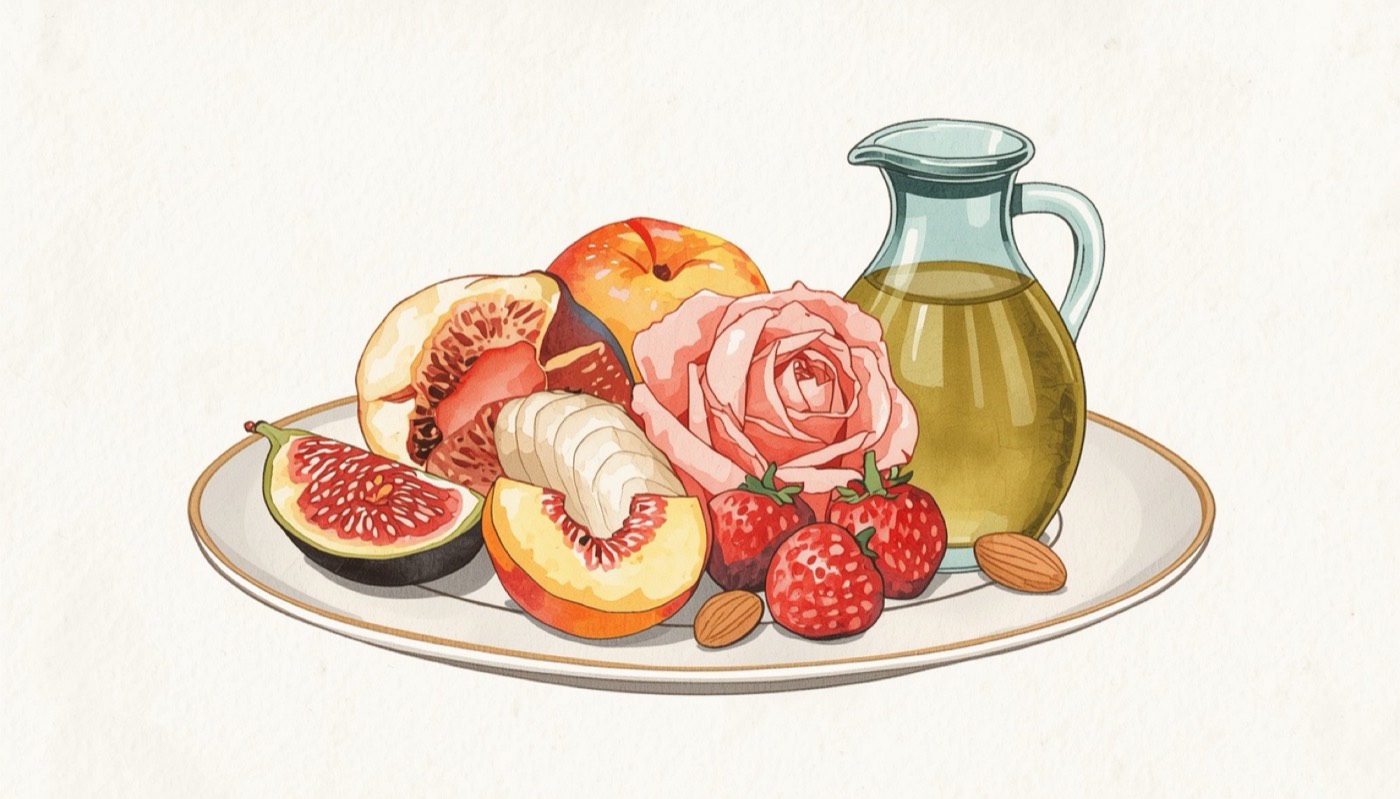
The diet follows from that. It is built on peeled fresh fruit with extra-virgin olive oil, culinary fruits such as tomato, avocado and cucumber, raw fish (sashimi), raw egg yolk and freshly cracked nuts. It allows cooked "munch-foods", capped at 15 g of protein per munch-food meal. It excludes dairy, grains, beans and vegetables. The book also states that fibre is unnecessary and that raw animal food is not dangerous.
Its promises are specific. About 90% of acne patients, it says, can clear acne through diet. Cellulite, it says, is drastically decreased after two months on the diet.
We read the book's free online text and checked its claims against the sources listed below.
What holds up
- Cooking creates new compounds. Uribarri and colleagues (2010) found dry heat raises advanced glycation end-products (AGEs) in food 10- to 100-fold over the uncooked state. AGEs also build up in skin collagen with age, and faster in diabetes (Dyer and colleagues, 1993).
- Gut and skin are linked. Reviews tie altered gut bacteria to acne, atopic dermatitis and psoriasis. It is association, not proof, and probiotic trials in acne are scarce.
- Diet can affect acne. In a 2007 randomised trial (Smith and colleagues, 43 young men aged 15 to 25), a low-glycaemic-load diet cut acne lesion counts more than a control diet over twelve weeks. The diet also cut weight, so the trial cannot separate the two effects.
What the evidence does not support
- "Altered protein" as the single cause. We found no study that connects the whole chain from cooked food, to AGEs in skin, to cellulite.
- Cellulite as a food problem. Cellulite shows as fat protruding into the dermis, with low-grade inflammation in thigh and buttock fat. A 2023 review (Kruglikov and Scherer) proposes that bacterial endotoxin building up in that fat plays a part. It calls this a proposal, not a finding.
- The 90% acne figure and the two-month cellulite promise. We found no trial behind either.
- Fibre is unnecessary. The book argues fibre does not cure constipation. A 2019 Lancet analysis of 185 prospective studies and 58 trials (Reynolds and colleagues) found observational data suggesting 15 to 30 per cent lower all-cause and cardiovascular mortality in the highest fibre consumers than the lowest.
- Heat-cooked meat as a carcinogen. Heterocyclic amines form when muscle meat is cooked at high temperature. The US National Cancer Institute says population studies have not established a definitive link between them and cancer in humans.
What is risky
Food Standards Australia New Zealand (FSANZ) says pregnant women, older people and people with weakened immune systems should not eat raw fish, and should use pasteurised or fully cooked eggs in place of raw or lightly cooked ones. The book's heading "Raw is Not Dangerous" contradicts that advice. Do not follow it.
The 15 g cap on cooked-food protein is low. The Australian and New Zealand recommended dietary intake for women aged 19 to 70 is 46 g of protein a day (0.75 g per kilogram), and muscle loss speeds up after fifty (see our home page). The book allows other protein from raw fish and yolk, but we could not confirm a total that reaches 46 g.
Cutting out vegetables, grains, beans and dairy removes fibre and calcium sources. For women past menopause, bone and muscle are the priority.
The useful part
The book asks a fair question: does what we eat show up on our skin? The research says partly: a low-glycaemic-load diet helped acne in one trial, and gut bacteria are linked to some skin conditions. You can act on that without the diet. Eat more fruit, nuts, fish, olive oil and fibre-rich plants. Cut back on sugar and heavily browned, fried or charred food. Keep protein adequate.
The strict raw regimen carries risks the evidence does not justify. If you want to try a major diet change, tell your doctor first.
Where to find the book
The author's text is online as the "Free Acne Book" at freeacnebook.com, linked from waisays.com (archived copy). This site does not host the book.
Sources
- Genriiu W. No More Cellulite, No More Acne, No More Overweight. 2001-2002. ISBN 90-806424-1-X.
- Uribarri J et al. Advanced glycation end products in foods and a practical guide to their reduction in the diet. J Am Diet Assoc 2010
- Dyer DG et al. Accumulation of Maillard reaction products in skin collagen in diabetes and aging. J Clin Invest 1993
- De Pessemier B et al. Gut-skin axis: current knowledge of the interrelationship between microbial dysbiosis and skin conditions. Microorganisms 2021
- Sánchez-Pellicer P et al. Acne, microbiome, and probiotics: the gut-skin axis. Microorganisms 2022
- Smith RN et al. A low-glycemic-load diet improves symptoms in acne vulgaris patients: a randomized controlled trial. Am J Clin Nutr 2007
- Kruglikov IL, Scherer PE. Pathophysiology of cellulite: possible involvement of selective endotoxemia. Obes Rev 2023
- Reynolds A et al. Carbohydrate quality and human health: a series of systematic reviews and meta-analyses. Lancet 2019
- US National Cancer Institute, Chemicals in meat cooked at high temperatures
- NHMRC, Nutrient Reference Values for Australia and New Zealand: protein
- FSANZ, raw fish dishes
- FSANZ, food safety for vulnerable people